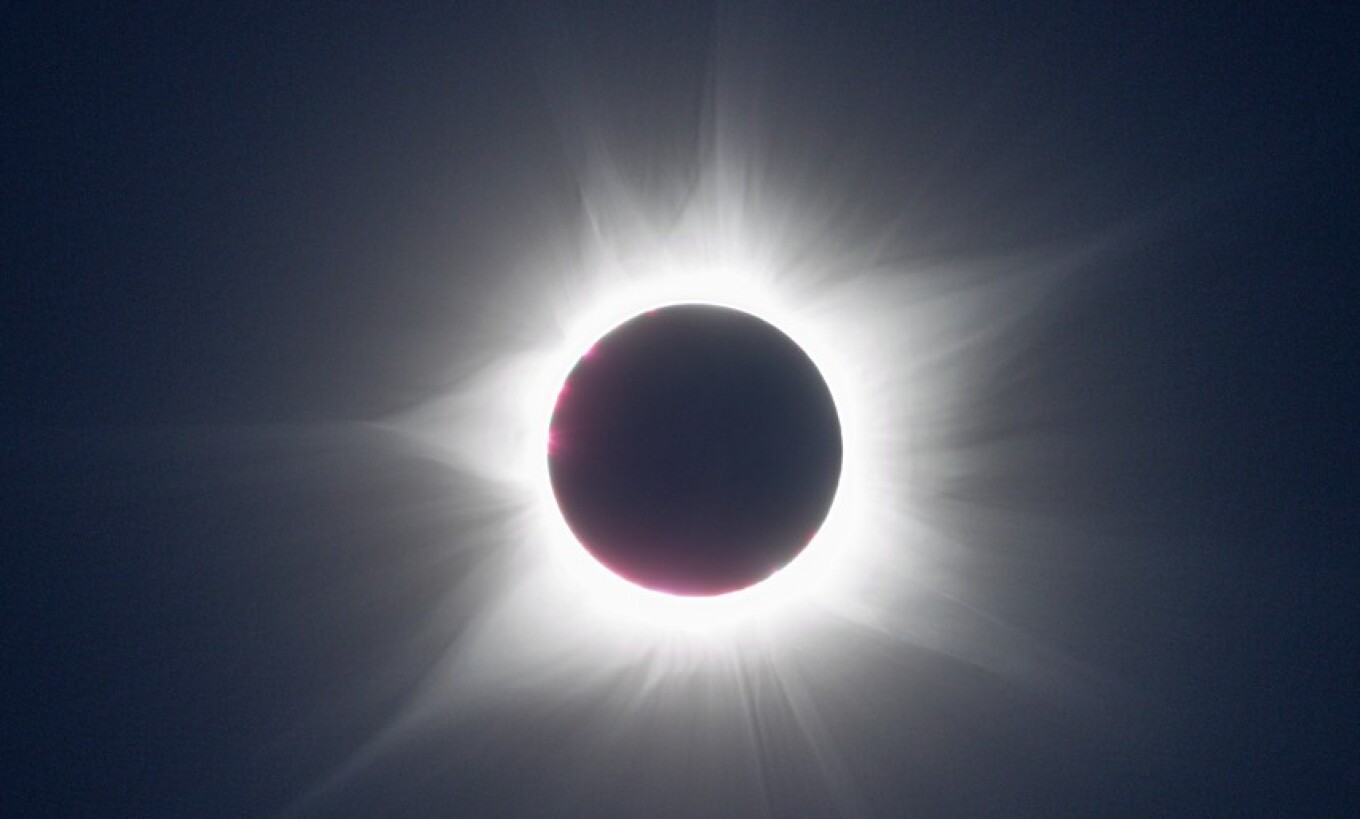
Έχουν περάσει περισσότερα από 25 χρόνια από την τελευταία φορά που η ηπειρωτική Ευρώπη παρακολούθησε ολική έκλειψη Ηλίου. Ήταν Αύγουστος του 1999, όταν η Σελήνη κάλυψε τον Ήλιο και ο ουρανός σκοτείνιασε για λίγο σε περιοχές της Ευρώπης. Είκοσι επτά χρόνια μετά, μια ολική έκλειψη Ηλίου επιστρέφει στην Ευρώπη με τη μεσογειακή γειτονιά μας, την Ισπανία, να μπαίνει στο επίκεντρό της.
Η έκλειψη θα ξεκινήσει το ταξίδι της τον Αύγουστο στη βόρεια Ρωσία, θα διασχίσει τον Αρκτικό Ωκεανό και την ανατολική Γροιλανδία, θα είναι στο μέγιστό της ανοιχτά της Ισλανδίας και τελικά θα φτάσει στη βόρεια Ισπανία λίγο πριν από τη δύση του Ήλιου. Ισπανικές πόλεις θα δουν τη Σελήνη να καλύπτει πλήρως τον Ήλιο για ένα λεπτό και 50 δευτερόλεπτα. Στη βόρεια Αμερική, τη δυτική Αφρική και άλλα σημεία της Ευρώπης θα είναι ορατή ως μερική έκλειψη. Το μονοπάτι της μερικής έκλειψης περιλαμβάνει και μερικές βορειοδυτικές περιοχές της Ελλάδας (Κέρκυρα, Ηγουμενίτσα, Κόνιτσα, Καστοριά, Φλώρινα), αλλά το ποσοστό της είναι τόσο μικρό που πρακτικά είναι μη παρατηρήσιμη.
Αυτή είναι η πρώτη ολική έκλειψη στην Ισπανία από το 1905 και η πρώτη στην Ισλανδία από το 1954. Η επόμενη ευκαιρία για την Ευρώπη να βιώσει παρόμοιο γεγονός θα είναι πολύ σύντομα, στις 2 Αυγούστου 2027 και το μονοπάτι της ολικότητας περιλαμβάνει τμήματα της νότιας Ισπανίας, του Μαρόκο, της Αλγερίας, της Τυνισίας, της Λιβύης, της Αιγύπτου και της Σαουδικής Αραβίας.
Όπως εξηγεί στο ΑΠΕ-ΜΠΕ η Φιόρη Μεταλληνού, αστροφυσικός στο Εθνικό Αστεροσκοπείο Αθηνών, υπεύθυνη για δράσεις διάχυσης της επιστήμης, και εθνική συντονίστρια διάχυσης της Αστρονομίας της Διεθνούς Αστρονομικής Ένωσης για την Ελλάδα, η ολική έκλειψη στη Μεσόγειο προσφέρει στους επιστήμονες της νότιας Ευρώπης και κυρίως της Ελλάδας περισσότερες ευκαιρίες για τη μελέτη της κορώνας του Ήλιου και την εξαγωγή συμπερασμάτων για την εξέλιξη και τις διαδικασίες που συντελούνται εκεί.
«Όταν γίνονται εκλείψεις, έχουμε την ευκαιρία οι ηλιακοί φυσικοί να παρατηρούμε την εξώτερη ατμόσφαιρα του Ήλιου, τη λεγόμενη ηλιακή κορώνα ή ηλιακό στέμμα, που αποκαλύπτεται όταν σκοτεινιάσει ο Ήλιος. Φωτογραφίζουμε την κορώνα και μελετάμε τη σύστασή της από διάφορα στοιχεία. Δεν έχει πάντα την ίδια σύσταση, αυτό εξαρτάται από την ηλιακή δράση. Οπότε είναι σημαντικό να παρατηρούμε την κορώνα, να δούμε τις διεργασίες που δημιουργούνται και να συγκρίνουμε με άλλες εκλείψεις για να κατανοήσουμε τις διεργασίες που συντελούνται».
Επαγγελματίες και ερασιτέχνες αστρονόμοι από την Ελλάδα, όπως μέλη του Ομίλου Φίλων Αστρονομίας, έχουν αρχίσει ήδη να οργανώνουν τα ταξίδια τους στην Ισπανία, για να παρατηρήσουν το φαινόμενο.
Στις 17 Φεβρουαρίου 2026 θα συμβεί άλλη μία έκλειψη Ηλίου, δακτυλιοειδής αυτή τη φορά. Κατά τη διάρκειά της η Σελήνη περνά μπροστά από τον Ήλιο αλλά δεν τον καλύπτει πλήρως με αποτέλεσμα ο ηλιακός δίσκος να φαίνεται ως φωτεινός δακτύλιος γύρω από το σκοτεινό φεγγάρι. Η έκλειψη αυτή θα είναι ορατή μόνο στην Ανταρκτική, ενώ η μερική έκλειψη θα φανεί από τη νότια Αφρική και νότια σημεία της Αργεντινής και της Χιλής.
Μπορεί η κορύφωση της δραστηριότητας του Ήλιου (ηλιακό μέγιστο) να ολοκληρώθηκε το 2025, ωστόσο η ηλιακή δραστηριότητα είναι μεγάλη και το 2026, και αυτό έχει ως συνέπεια να συνεχίζουμε και τη χρονιά που έρχεται να βλέπουμε πιο εντυπωσιακό Σέλας, κυρίως στις Βόρειες χώρες.
Πηγή: ΚΥΠΕ
First Total Solar Eclipse in Europe in 27 Years
Europe is preparing to witness a total solar eclipse on March 29th, a phenomenon not seen on the European continent for 27 years, since August 1999. The eclipse will begin in northern Russia, cross the Arctic Ocean and Greenland, and reach its maximum off the coast of Iceland, before becoming visible in northern Spain, where the Moon will completely cover the Sun for about 1 minute and 50 seconds. In other parts of Europe, as well as in North America and western Africa, the eclipse will be visible as a partial one. In Greece, a very small partial eclipse is expected in some northwestern regions (Corfu, Igoumenitsa, Konitsa, Kastoria, Florina), but it will be practically unnoticeable. The last total eclipse in Spain was in 1905, and in Iceland in 1954. The next opportunity for a similar total eclipse in Europe will be on August 2nd, 2027, with the path of totality passing through Spain, Morocco, Algeria, Tunisia, Libya, Egypt, and Saudi Arabia. This eclipse offers a significant opportunity for scientists to study the solar corona, the outer atmosphere of the Sun, and better understand solar processes. Astrophysicist Fiori Metallinou from the National Observatory of Athens explains that studying the corona during an eclipse allows for the observation of its composition and the processes taking place within it, comparing the data with previous eclipses. Amateur and professional astronomers from Greece have already begun organizing trips to Spain to observe the phenomenon. Additionally, an annular solar eclipse is expected on February 17th, 2026, which will be visible in Antarctica and partially in South Africa.
Similar Articles
Ολική έκλειψη Ηλίου στην Ευρώπη μετά από 27 χρόνια, τα αστρονομικά γεγονότα που έρχονται το 2026
Jan 1

Η πρώτη ολική έκλειψη Ηλίου στην Ευρώπη έπειτα από 27 χρόνια και άλλα αστρονομικά γεγονότα για το 2026
Jan 1

Μετά από 27 χρόνια, η Ευρώπη βλέπει ξανά ολική έκλειψη Ηλίου
Jan 1
Η Ευρώπη ετοιμάζεται για την πρώτη ολική έκλειψη Ηλίου μετά από 27 χρόνια
Jan 1

Το 2026 φέρνει την πρώτη ολική έκλειψη Ηλίου στην Ευρώπη μετά από 27 χρόνια και άλλα σημαντικά αστρονομικά γεγονότα
Jan 1
You Might Also Like

Ξεκινάει στο Μαρόκο το Κύπελλο Αφρικής
Dec 21

Ντέμης Χασάμπης: Τι ετοιμάζει ο Ελληνοκύπριος «σκακιστής» της τεχνητής νοημοσύνης στην Google
Dec 26

Τεχνητή Νοημοσύνη στην Εκπαίδευση: Ο θεμελιώδης ρόλος της Φιλαναγνωσίας
Dec 31

Πώς θα κάνουν πρωτοχρονιά τα κανάλια - Ο ΑΝΤ1 που βγήκε εκτός παιχνιδιού, η Ελπίδα, η Καραντώνη και το Voice Special
Dec 31

Σημαντικά επιστημονικά γεγονότα που αναμένουμε το 2026
Jan 1